

Ever been in a deposition that felt like a circus?
The witness is nervous, the court reporter can’t hear over construction noise, the Wi-Fi is sputtering, and you’re eyeing a clock wondering if you’ll get kicked out of the conference room at 5 PM. For legal professionals – litigators, court reporters, clients, and support staff alike – where and how a deposition happens can make or break the experience. Selecting and managing the right deposition venue is often trickier than it looks. From scheduling nightmares to tech troubles, deposition venues can throw plenty of curveballs your way. But it doesn’t have to be that way.
In this comprehensive overview, we’ll break down the top 10 challenges in choosing and managing deposition venues and share tips to overcome them. Consider this your roadmap to turn deposition venue headaches into an occasion for smooth, stress-free proceedings. Let’s dive in!
1. Inconvenient Deposition Location
The challenge: Ever had to drive an hour (or three) for a deposition? An inconvenient or poorly chosen location can frustrate everyone involved. If the venue is far from the office, courthouse, or even a decent parking spot, you’re starting the day on the wrong foot. Not only do attorneys and clients lose valuable time in transit, but a hard-to-find venue can make witnesses late or anxious. Convenience matters – especially when multiple parties are coming from different areas.
How to overcome it: Aim for a neutral, centrally located venue that’s easy for all parties to reach. Ideally, it should be near major highways or transit and offer ample parking. Proximity to local courts or law offices is a bonus, especially for those last-minute file grabs or post-deposition filings. Remember, a deposition location isn’t just a dot on the map – it’s the place where clients and opposing counsel will form impressions. Choose a venue that’s accessible and simple to navigate, so everyone can arrive relaxed and ready to focus on testimony, not traffic.
2. Scheduling Conflicts and Limited Availability
The challenge: Coordinating a deposition feels like planning a family reunion – aligning multiple attorneys’ calendars, a court reporter’s schedule, the witness’s availability, and the venue’s open slots. One common reason depositions get delayed is scheduling conflicts: a deposition requires several people to be available at once, and if one key player has a conflict, you’re back to the drawing board. On top of that, popular conference rooms or legal meeting spaces can book up fast. If your venue requires long lead times or doesn’t allow flexibility, a sudden case scheduling change or a last-minute postponement can leave you without a suitable room. It’s not uncommon for depositions to be adjourned multiple times due to these hurdles – which drags out cases and tests everyone’s patience.
How to overcome it: Plan early and stay flexible. The moment a deposition is on the horizon, start scouting venues and lock in a date. Look for venues that offer flexible booking options, such as hourly or half-day rentals, rather than requiring full-day commitments. This not only controls costs but also makes it easier to adjust if things change. Many modern deposition venues (like professional coworking spaces or legal meeting centers) allow quick online reservations and easy rescheduling. Having a backup date (or even a backup venue) in mind can save the day if someone has to cancel last-minute. In short, choose a venue partner who understands that “last-minute changes happen” and can accommodate shifting schedules without hassle.
3. Unreliable Technology and Connectivity
The challenge: In today’s legal world, even in-person depositions rely on technology. You might need Wi-Fi for realtime transcription, a screen to display exhibits, or a speakerphone for an attorney dialing in. Nothing is worse than a deposition room with spotty internet or a tangled mess of cables that should connect to a monitor – but don’t. If the Wi-Fi drops or the power outlets are scarce, the transcript (and your sanity) will suffer. Court reporters and videographers also depend on stable power and acoustics to do their jobs. And let’s not forget the common “Can you see my screen now?” struggles when presenting digital exhibits. A venue with outdated tech or poor connectivity can turn a straightforward deposition into an IT nightmare.
How to overcome it: Vet the tech before you book. Ensure the venue provides business-grade, stable internet and modern A/V equipment – think large HD displays for exhibits, quality microphones, and plenty of accessible power outlets. Don’t hesitate to ask for the Wi-Fi speed or do a quick test run ahead of time. Ideally, the room should be plug-and-play: you can connect your laptop to a screen or video conferencing system without needing a tech degree. Backup options are golden, too. For example, a wired Ethernet connection as a fallback can be a lifesaver if Wi-Fi gets temperamental. By choosing a venue that invests in reliable tech infrastructure, you’ll keep the focus on the deponent’s answers – not on fiddling with cables under the table.
4. Challenges with Remote or Hybrid Depositions
The challenge: Depositions aren’t always fully in-person these days. You might have a witness appearing via Zoom, co-counsel listening in from another state, or a client observing remotely. Hybrid depositions – part in-person, part virtual – have quickly become common. In fact, during the height of the pandemic, up to 90% of deposition proceedings happened virtually, and many legal professionals continue to favor remote formats for their convenience. But hybrid setups add complexity: you need to ensure remote participants can see and hear everything clearly, that on-site and online attendees can communicate seamlessly, and that the deposition is being recorded properly. A single webcam in a big conference room may not capture all the nuances. Plus, technical glitches like audio lag or people talking over each other can derail the flow of questioning. Without the right support, a hybrid deposition can feel disjointed and fraught with “you’re on mute” moments.
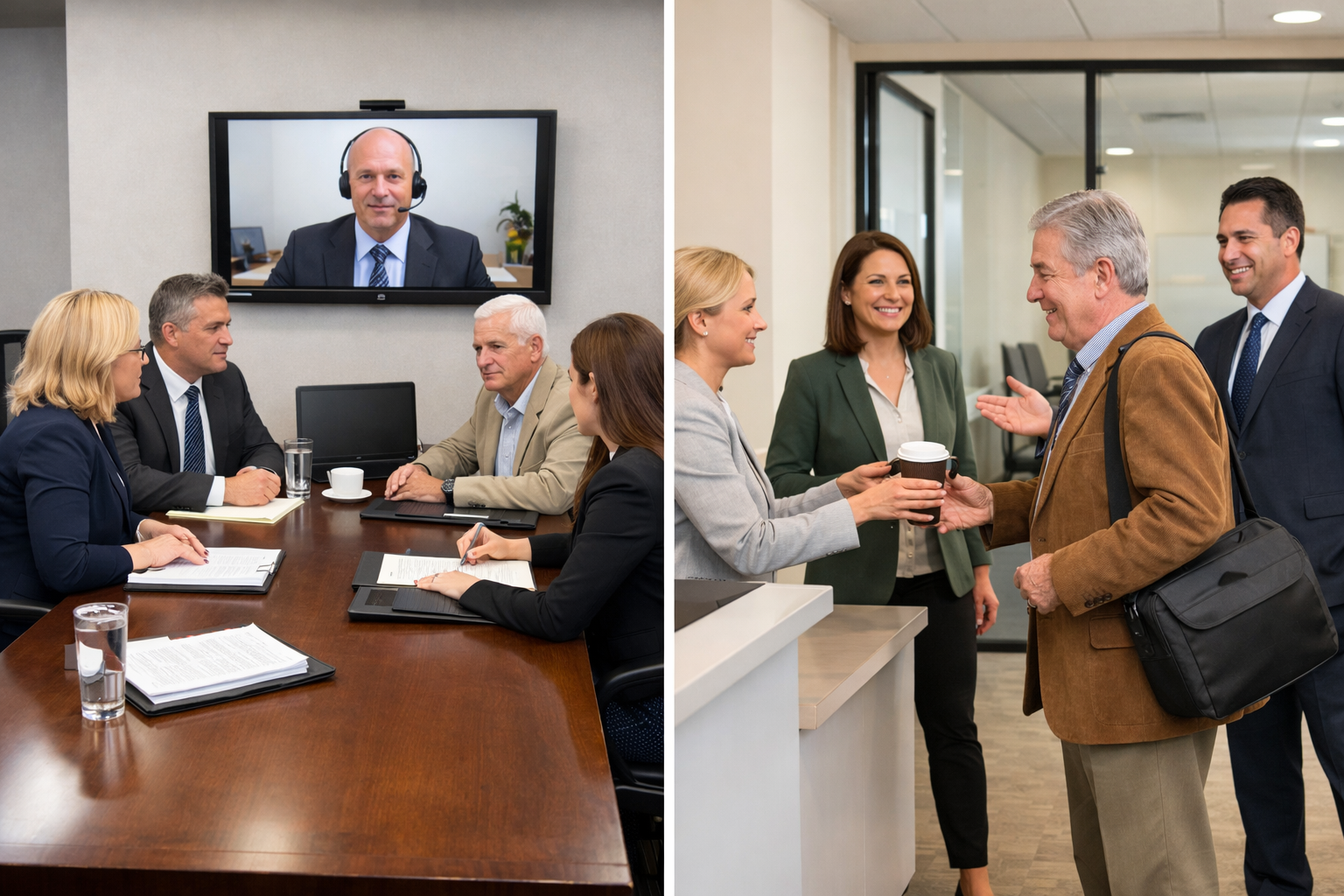
How to overcome it: Choose a venue that is “hybrid-ready.” This means the room is equipped with or can accommodate the tools for a smooth remote experience: a wide-angle camera that can cover all speakers, high-quality boundary microphones for clear audio, and a large screen or conference system to display remote participants. There should be no lag in communication – ideally, the tech setup should make a remote attendee feel as if they’re in the room. Importantly, ask if the venue offers on-site tech support for the meeting. If a remote connection drops or a Zoom link misbehaves, having a technician on hand to troubleshoot in real-time is invaluable. When done right, hybrid depositions can actually save time and costs while keeping everyone engaged. The key is a venue that merges the physical and virtual components into one cohesive, secure environment – so all participants, near and far, stay on the same page (and record).
5. Noise, Distractions, and Privacy Concerns
The challenge: A deposition room is supposed to be a controlled, confidential environment – but that’s not always what you get. External noise (sirens blaring, construction next door, loud hallway chatter) can disrupt testimony and frustrate court reporters. Inadequate soundproofing might mean your supposedly “private” deposition isn’t so private; sensitive testimony could be overheard through thin walls or open doors. Likewise, distractions inside the room – from a ringing office phone to a squeaky air conditioner – pull focus from the conversation. Confidentiality is not just courteous, it’s often legally required. Yet in a sub-par venue, keeping the deposition quiet and secure can feel like an uphill battle.
How to overcome it: Prioritize privacy and sound control when selecting a venue. Look for rooms that are truly designed for legal meetings – ones with solid doors, good sound insulation, and even frosted glass for discretion. A dedicated deposition space should ensure that what’s said in the room stays in the room. Some modern legal venues even provide white noise machines or sound masking in hallways to prevent eavesdropping – a nice touch. During the deposition, minimize internal distractions: ensure phones are off, and that the venue’s HVAC or AC isn’t so loud that it competes with voices. If confidentiality is critical (and when isn’t it?), confirm the venue has protocols in place – for example, no outside interruptions, and perhaps a receptionist who can steer away any unexpected visitors until you’re off the record. The goal is a quiet, interruption-free deposition that allows everyone to focus and speak freely, confident that no unwanted ears are listening.
6. Lack of a Neutral, Professional Environment
The challenge: Ever walked into a deposition held in a dingy back room or a bustling coffee shop corner? It’s not exactly confidence-inspiring. The tone of a deposition is influenced by the setting. A venue that’s too informal, chaotic, or – conversely – one side’s home turf (like an attorney’s own office where their plaques and firm logo dominate) can unsettle participants. For clients and witnesses, an unprofessional environment can increase anxiety; for attorneys, it can even impact credibility. We’ve all heard “first impressions matter,” and here, the deposition venue is part of your case’s first impression. An unneutral setting might also raise eyebrows about fairness (imagine a deponent’s concern if the deposition is literally in the opposing counsel’s conference room). In short, the wrong venue can undermine the seriousness of the proceedings and the comfort level of those involved.
How to overcome it: Opt for a professional, neutral setting that commands respect without feeling intimidating. Ideally, the venue should be a modern conference room or meeting space that signals credibility and impartiality for both sides. Think along the lines of a well-appointed business center or coworking space that regularly hosts legal proceedings. Such environments are polished and neutral – no one’s turf, just a level playing field. A bit of comfort goes a long way too: neutral décor, comfortable seating, and adjustable lighting can help reduce tension in the room. The right environment doesn’t just look professional; it actively puts people at ease. Legal professionals often report that when clients and witnesses feel more at ease, it improves cooperation and clarity in their testimony. Plus, holding a deposition in a slick, neutral venue quietly elevates your practice’s image – you’re showing all parties that you take the process seriously and invest in doing it right. Bottom line: when choosing a venue, remember that you’re not just renting a room – you’re setting a stage.
7. Insufficient Space or Comfort for Long Sessions
The challenge: Depositions can be marathons, not sprints. A cramped room with too few chairs, a table that’s too small for all the case files, or an awkward layout can turn an already taxing day into a physically uncomfortable one. If you’ve ever tried to fit six lawyers, a witness, a videographer, and a court reporter around a tiny table, you know the struggle. Lack of space isn’t just about comfort – it can affect the record. (Picture the court reporter juggling an outlet for their equipment, or an attorney accidentally elbowing the videographer’s tripod.) Similarly, an all-day deposition with no access to refreshments or a break area can leave everyone drained. Uncomfortable chairs, poor lighting, or insufficient climate control will steadily chip away at participants’ concentration. Fatigue and discomfort are the enemies of a good deposition – they make people distracted and irritable, and that could reflect in the transcript.
How to overcome it: Think ahead about capacity and comfort. When scouting venues, confirm the room can comfortably seat everyone with room to spare. A well-planned deposition room should have space for all parties (counsel, deponent, court reporter, any videographer) plus easy pathways to come and go. Check for things like ample outlets around the table (no one should be crawling under tables mid-deposition) and a clear line of sight for the court reporter to all speakers. Comfort-wise, look for ergonomic chairs, good lighting, and a reasonable temperature. Little details – quiet air conditioning, adjustable lighting, nearby restrooms – matter for keeping everyone fresh and focused. If the deposition is likely to run long, a venue that offers a lounge or breakout area for quick breaks is a bonus. Even having water, coffee, or the ability to order lunch easily can keep energy levels up. Remember, a deposition is a mental and physical endurance test; the venue should be your ally in making everyone as comfortable as possible, so they can concentrate on the testimony, not a backache or a blinking fluorescent light.
8. No On-Site Support or Amenities
The challenge: When you’re deep in the throes of a deposition, the last thing you want is to step out to handle a logistical issue – like figuring out the Wi-Fi password, or hunting down a printer to make a quick copy of an exhibit. In many venues (think bare-bones conference room rentals or improvised office spaces), you’re on your own. No receptionist to greet and guide your witness, no administrative support if you need an extra notary seal or more copies of a document. Lack of on-site staff and amenities can make everything feel like heavy lifting. If something goes wrong – say, the teleconference unit isn’t working – you become the de facto IT person. These gaps not only waste time but can also create unprofessional pauses in front of clients and deponents. In short, without support, the burden of managing the venue falls entirely on your team’s shoulders, on top of managing the case testimony.
How to overcome it: Use venues that come with a professional support team and legal-friendly amenities. Imagine a deposition where a staff member greets your attendees, guides the deponent to a waiting area, and makes sure everyone has what they need – that level of service takes so much weight off you. Many dedicated deposition or meeting facilities offer on-site receptionists and support staff to assist with everything from check-in to troubleshooting equipment. It’s wise to confirm the availability of printing, scanning, or secure Wi-Fi in advance. If you know you’ll need to mark exhibits, ask if the venue can provide basic supplies (sticky tabs, extra notepads) or even a shredder for confidential documents when you’re done. Some full-service legal venues can also arrange for catering, coffee, or lunch deliveries so you don’t lose momentum at midday. The bottom line: an on-site support team and amenities are not just nice-to-haves, they are game changers. They keep the deposition running smoothly and let you focus on the substance of the deposition while the logistics are quietly handled in the background.
9. Budget Constraints and Hidden Costs
The challenge: Let’s face it – litigation is expensive, and every deposition has to justify its price tag. Renting a fancy boardroom at a downtown law firm or a hotel meeting room can blow the budget quickly, especially if you need it for multiple days. On the flip side, going cheap often means sacrificing some of the essentials we’ve discussed, which can hurt the case more than it saves dollars. Beyond the obvious rental fee, there are often hidden costs: mandatory catering charges, parking fees, overtime rates if the deposition runs long, or premium charges for using the venue’s videoconferencing equipment. Nothing stings more than getting the final bill and realizing you paid extra for every coffee refill and extension cord. Budget constraints can pressure legal teams to make do with subpar venues or try to conduct depositions in-house, possibly compromising on neutrality or quality. It’s a challenge to find a venue that hits the sweet spot of cost-effective yet fully equipped.
How to overcome it: Be clear on costs upfront and seek flexible options. Start by comparing venue packages – many modern legal venues or coworking spaces offer hourly booking or bundle deals that can be far more economical than an all-day rental you don’t fully use. Ask about what’s included: Wi-Fi, basic A/V, and coffee/water might be complimentary at some locations, saving you from surprise add-on fees. It’s also wise to inquire about policies if you run over your booked time (is there an overtime fee by the half-hour?). To control costs, consider venues that let you bring your own court reporter or equipment without penalty – some court reporting agencies also offer conference rooms as part of their service. And don’t underestimate the value of those included amenities: a slightly higher hourly rate that includes printing, snacks, and support may actually cost less overall than a cheap room that nickel-and-dimes you for each service. The goal is to find a venue that aligns with your budget without cutting corners on the deposition experience. They do exist – places that deliver professionalism and tools at a fair price. It just takes a bit of research (and asking the right questions) to avoid the budget traps and ensure there are no unwelcome surprises on the invoice.
10. Handling Last-Minute Changes and Contingencies
The challenge: Depositions are famous for their unpredictability. A case might settle the night before, a witness could fall ill, or an proceeding could suddenly require an extra day of testimony. When the unexpected happens, a rigid venue arrangement can add stress. For example, if your deposition runs two hours over, will the venue kick you out or charge an exorbitant overtime fee? If you need to switch to a larger room or add a breakout room for attorney-client discussions, is that even possible on the fly? And let’s not forget Mother Nature or Murphy’s Law – power outages, traffic delays, even sudden lockdowns (as we learned in recent years) can throw a wrench in the day. Managing a deposition venue also means having a Plan B for emergencies. Without one, a simple hiccup can cascade into a full-blown crisis – like a deposition that has to be aborted and rescheduled weeks later, wasting everyone’s efforts.
How to overcome it: Partner with venues that offer flexibility and backup plans. When booking, discuss “what if” scenarios: Can you extend your booking the day-of if needed? Is there another room available if you need to break into caucuses or private discussions? Many professional venues will try to accommodate reasonable extensions or adjustments – some even have policies for grace periods or easy room upgrades if available. It’s also smart to ensure the venue has contingency measures: a generator or battery backup for critical equipment in case of power loss, multiple internet connections (so if one ISP goes down, another is up), and clear procedures for emergency evacuations or health-related disruptions. Having the venue’s staff on-hand means you can quickly adapt – for instance, switching a deposition to fully remote on short notice if travel is interrupted, with the venue providing the secure video platform. Ultimately, you want a venue that “supports your best work – not one that complicates it”. The right venue partner will be just that: a partner in your success, ready to smooth out the bumps so you can keep your case on track no matter what surprises arise.
Turning Challenges into a Smooth Deposition Experience
Reading through these challenges, you might be thinking: “Do I really have to worry about all of this?” The truth is, when you choose the wrong venue, any one of these issues can come to life and derail your deposition. But here’s the good news – a bit of foresight and the right venue choice will prevent most problems before they happen.
Imagine walking into a deposition room and everything just works. The location is easy for everyone to find. The room is set up with comfy chairs and nameplates, the high-speed internet is already tested, and the HDMI connection to the big screen powers up your exhibit presentation in seconds. A friendly receptionist has greeted your nervous witness and offered them water, putting them at ease. White noise in the hallway and solid walls guarantee privacy – no more worrying about being overheard. Your remote co-counsel appears on the large screen with crystal-clear audio, as if sitting at the table. The court reporter plugs in their equipment without a hitch (ample outlets, thank you!), and gives you a thumbs-up that they can hear everyone perfectly. You start the deposition on time because scheduling was a breeze – the venue let you book just the hours you needed. And if you decide mid-day that you need an extra hour or an extra room for breaks, it’s handled with a quick call to the front desk. You wrap up the day feeling in control, professional, and maybe a little amazed at how smoothly it all went.
This isn’t a fantasy. This is what a well-managed deposition venue delivers. By anticipating the pain points – location, scheduling, tech, remote integration, noise, environment, space, support, cost, and contingencies – you can choose a venue that has already solved these problems for you. Legal industry experts recommend private, professionally staffed meeting rooms with sound insulation, receptionist support, and plug-and-play tech – all available on flexible terms. In other words, venues designed for legal work take the worry out of legal work. When the environment is right, everyone performs better: witnesses are calmer, attorneys are sharper, and even clients notice the difference in how seamlessly things unfold.
So as you plan your next deposition, treat the venue not as an afterthought, but as a strategic part of your case preparation. Every challenge above has a flipside solution waiting for you in a modern deposition space. Why settle for less?
Ready for a deposition without the drama? We’re here to make that happen. Email membership@coworkingconnection.com or call 800-762-1391 to schedule your next deposition at a venue engineered for legal success. Let us handle the logistics and venue management, so you can focus on what you do best: winning your case.

Book Your Tour Today!
Ask Joe For The "Special Pricing"